GET TO KNOW US
A legacy for future generations
Structured in accordance with U.S. corporate law.
INFRASTRUCTURE
OF AMBIENT INTELLIGENCE

From Observation to Intelligence
THE FOUR PILLARS OF THE PLATFORM
OBSERVATION INFRASTRUCTURE
Infrastructure for the continuous acquisition of environmental information.
Progressively integrate:
Its objective is to generate verifiable long-term observations.

ENVIRONMENTAL DATA CORE
Digital infrastructure aimed at preserving and governing the information generated by the platform.
Its functions include:
The Environmental Data Core constitutes the institutional repository of the ecosystem's environmental memory.


ENVIRONMENTAL INTELLIGENCE
Transformation of verifiable information into usable knowledge.
It integrates capabilities of:
Ambient intelligence makes it possible to convert accumulated observation into scientific, technological and strategic value.
LONG-TERM GOVERNANCE
Observational continuity requires institutions capable of operating over multiple decades.
The platform's governance incorporates:
Functional separation of responsibilities
Stewardship Environmental
ESG Governance
Independent scientific oversight
Strategic asset protection
Institutional continuity mechanisms
Governance is an equivalent component in importance to scientific and technological infrastructure.
WHY IS IT IMPORTANT?
The challenges associated with climate change, biodiversity, ocean resilience and environmental transformation operate on time scales that far exceed the traditional cycles of projects and organizations.
The main limitation to understanding these processes is not the lack of computational capacity.
It is the absence of high-quality longitudinal environmental observations.
Observations that were never made cannot be reconstructed
later.
The construction of permanent observation infrastructure is a
response to this structural limitation.
LONG-TERM VISION
Each additional year of operation strengthens:
Continuity is the platform's main value multiplier.
For this reason, the Ambient Intelligence Infrastructure has been conceived as a permanent institutional capacity aimed at serving science, climate resilience and the preservation of environmental memory for future generations.
Infrastructure for
capital verifiable natural
Gotxa-Smart acts as an institutional structuring platform for long-term conservation, carbon and environmental infrastructure projects, integrating government governance, MRV systems and climate resilience frameworks.
We structure conservation, carbon, and environmental infrastructure platforms through territorial administration, MRV systems, and institutional environmental governance.
It is not the speculative commercialization of environmental assets, but the construction of resilient infrastructure capable of sustaining ecological integrity, environmental traceability and territorial continuity over horizons of multiple decades.
Through the integration of territory, governance, technology and environmental verification, Gotxa-Smart seeks to contribute to the development of a new generation of infrastructure for institutional natural capital.
Our Aim
Gotxa-Smart LLC Gotxa-Smart was established as a patrimonial vehicle to consolidate and professionalize conservation initiatives, responsible territorial development, and international trade with social impact. Although the parent company was incorporated in December 2024, the group maintains operational and management continuity since 2017 through associated vehicles and projects in Chile. Our methodology combines the protection of natural capital, a clear separation between conservation assets and commercial operations, and financial structures that ensure the economic independence of each business unit.
OUR VISION
Our vision is to consolidate a natural capital infrastructure platform recognized for its ability to integrate territorial permanence, environmental verifiability, and operational resilience under long-term institutional standards.
We seek to contribute to the development of a new generation of environmental systems where conservation evolves from passive protection of the territory towards active infrastructure for monitoring, traceability and ecological continuity.
Through the integration of territory, technology, governance, and science, we plan to build a resilient network of verifiable environmental assets capable of supporting climate research, environmental intelligence, and future institutional mechanisms for natural capital in Patagonia and other strategic regions.
Conservation and cultural heritage
Gotxa-Smart LLC develops conservation models aimed at protecting territories of high ecological, historical, and cultural value through long-term environmental stewardship and land management structures. Since 2017, organizations affiliated with the platform have maintained conservation efforts across more than 2,000 hectares located in the Ranco Province and Chilean Patagonia, prioritizing the preservation of biodiversity, ecosystem continuity, and environmental resilience.
OUR PROJECTS
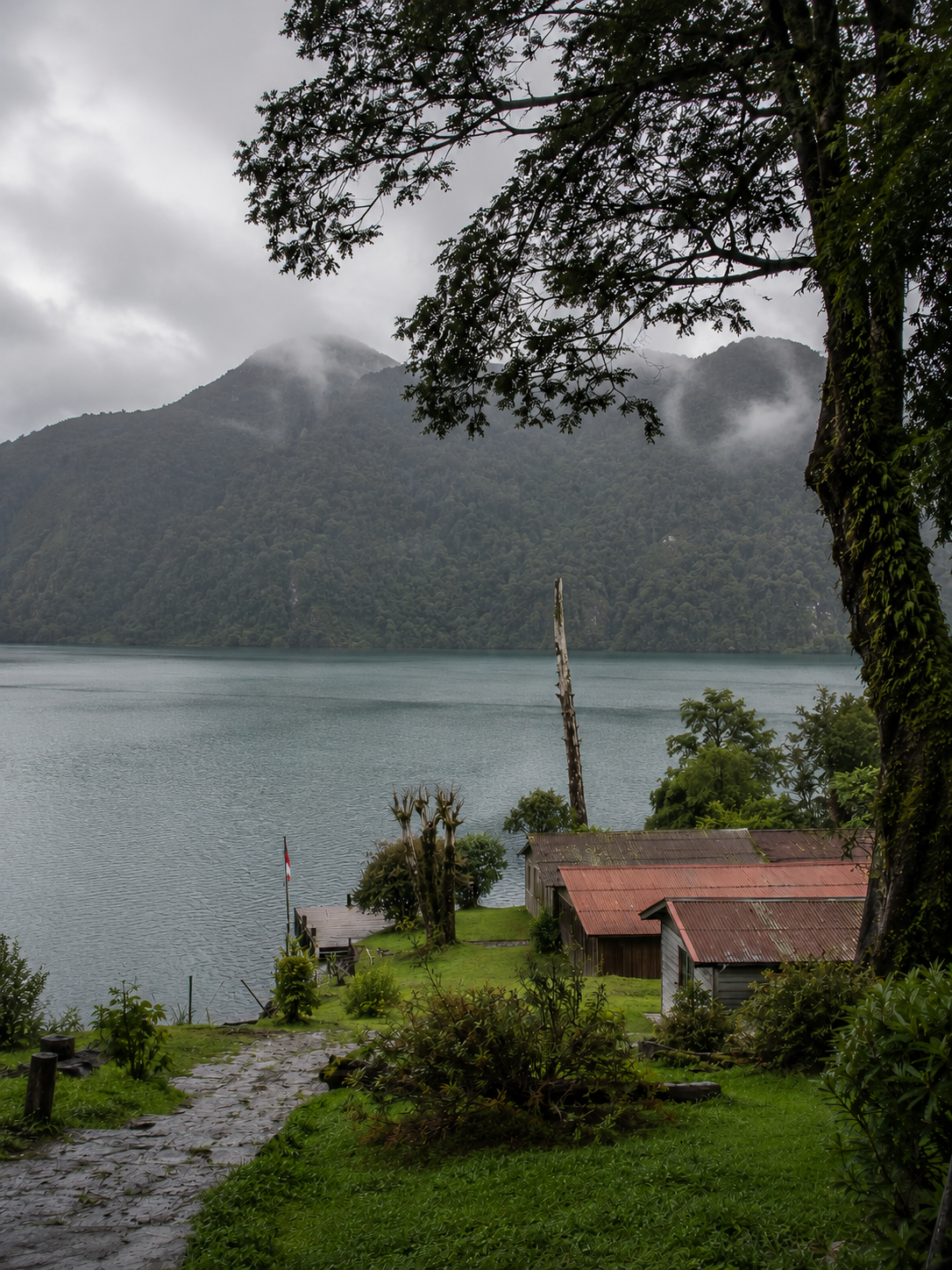
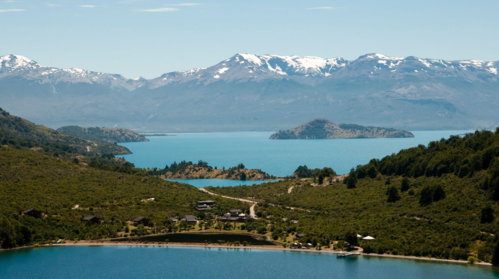
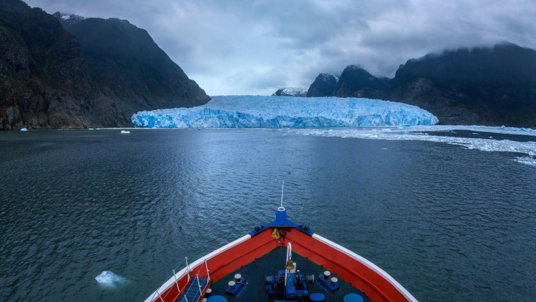
gotxa-Smart LLC develops initiatives aimed at consolidating natural capital infrastructure through territorial conservation, environmental monitoring systems and resilient operational capacities in Northern Patagonia and other strategic corridors.
The platform's initiatives include: ⁹

Territorial Conservation Infrastructure
Development and protection of strategic territories under perpetual conservation structures, prioritizing ecological continuity, environmental resilience and verifiable traceability
Stewardship and Territorial Resilience
Strengthening ecological response capacities, operational continuity and territorial stewardship through alliances with foundations, stewardship organizations and regional actors linked to conservation and environmental resilience.


MRV Infrastructure
Despliegue de sistemas de monitoreo ambiental y climático mediante:
- oceanographic buoys
- climate sensors;
- environmental telemetry;
- hydrological monitoring;
- and longitudinal datasets.
The goal is to build persistent capabilities of
environmental verification and territorial resilience.
Development and protection of strategic territories under perpetual conservation structures, prioritizing ecological continuity, environmental resilience and verifiable traceability
Corredor Parque Pumalin
Project aimed at structuring verifiable environmental infrastructure through scientific base, persistent monitoring and preparation for international standards of environmental integrity.
The initiative is developed under the following principles:
- verifiability
- permanence
- multi-entity governance
- and long-term environmental monitoring.
Environmental Data Infrastructure
Construction of ambient intelligence systems aimed at generating:
- persistent climate datasets;
- territorial traceability;
- ecological metrics;
- and scientific validation capabilities for future
- institutional applications of natural capital.
Territorial Continuity, Systemic Resilience and Long-Term Stewardship
2017–2030
Southern Biological and Marine Corridors represents the progressive consolidation of a territorial vision initiated in Northern Patagonia of Chile during 2017, based on ecological continuity, physical presence in the territory, human resilience and long-term scientific development.
From its earliest stages, the initiative has evolved through continuous processes of exploration, active conservation, territorial planning, legal structuring and institutional design aimed at developing resilient infrastructure for the southern hemisphere under standards compatible with international governance, operational continuity and intergenerational stewardship.
Currently, the platform maintains approximately 2,000 hectares under active conservation and projects future stages of territorial expansion, ecological consolidation and gradual deployment of scientific, logistical and technological capabilities through phased implementation schemes and prudent risk mitigation structures
Far from being a reactive or short-term initiative, the Southern Biological and Marine Corridors have been conceived as an integrated framework for territorial resilience capable of articulating:
- ecological conservation
- climate resilience
- longitudinal environmental monitoring
- operational continuity.
- territorial governance.
- scientific infrastructure
- human stability.
- cooperación institucional.
- hemispheric environmental intelligence.
Advanced Systems Modeling & Institutional Architecture
The conceptual, legal, and operational development of the platform has required extensive processes of strategic modeling, multidisciplinary analysis, and long-horizon systemic structuring.
Over more than a decade of territorial work and particularly through the last few years of intensive technological integration, the initiative has consolidated advanced institutional planning capabilities aimed at processing complex environments of high ecological, logistical and regulatory sensitivity.
Under this approach, artificial intelligence is not merely an accessory to productivity, but rather an advanced institutional modeling capability designed to strengthen operational consistency, territorial continuity, and long-term resilience before the physical implementation of infrastructure on the ground.
This process has enabled the development of mechanisms for functional segregation, reputational mitigation, heritage protection, and operational stability compatible with long-term climate infrastructure projects and complex territorial ecosystems.
The ecosystem architecture has been progressively refined through:
- Strategic simulation.
- Operational resilience analysis.
- Multi-level legal integration.
- Prudential financial modeling
- Diseño de governance frameworks.
- Governance framework design.
- Advanced document structuring.
- Contemporary artificial intelligence tools.
- Applied to systemic planning.
Phased Institutional Deployment
& Hemispheric Continuity
The platform has been structured using phased implementation methodologies designed to align territorial expansion, scientific capabilities, logistical resilience, and institutional governance with realistic long-term deployment horizons.
- Consolidation of permanent conservation structures.
- Strengthening MRV capacities.
- Deployment of resilient scientific infrastructure.
- Integration of hemispheric monitoring.
- International academic cooperation.
- Longitudinal ecological connectivity.
- Community resilience
- Verifiable territorial intelligence
- Operational continuity for remote and strategic ecosystems in the southern hemisphere.
Over time, the initiative has accumulated territorial, operational, scientific and institutional capacities aimed at strengthening resilient models of ecological stewardship for environmentally sensitive southern regions.
Under this vision, Gotxa-Smart LLC assumes the role of institutional sponsor, systems integrator and developer of resilient territorial architecture aimed at strengthening ecological stability, scientific cooperation and intergenerational continuity for future decades.
Collaborative Scaling &
Institutional Partnership Framework
As part of its scaling architecture, the platform prioritizes institutional cooperation schemes based on:
- collaboration agreements.
- modular integration structures.
- functional segregation of responsibilities.
- contractual exposure mitigation;
- progressive implementation of capabilities;
- independent governance frameworks;
- cooperación académica y científica distribuida.
The model seeks to facilitate scalable participation of universities, foundations, scientific institutions, technology operators and strategic partners through mechanisms compatible with prudential limitation of liability, institutional autonomy and long-term operational continuity.
This collaborative architecture allows the development of complex territorial and scientific capabilities without requiring absolute centralization of execution, while simultaneously preserving institutional flexibility, operational resilience, and technical specialization.
Strategic Project Structuring & Institutional Standards
As a natural extension of the accumulated experience in territorial modeling, climate resilience and complex institutional architecture, Gotxa-Smart LLC projects the progressive development of a third strategic line oriented towards advanced structuring of resilient projects for third parties.
This division will seek to provide
- institutional design
- contractual structuring.
- governance frameworks.
- ESG architecture
- MRV models
- asset segregation
- risk mitigation matrices
- operational continuity.
- territorial compliance.
- institutional resilience systems
The platform does not primarily focus on the direct execution of works or physical construction, but rather on the development of methodologies, standards, contractual structures and integrated planning frameworks aimed at strengthening bankability, resilience and continuity of complex projects developed by third parties.
Under this approach, the initiative seeks to progressively evolve towards an institutional reference model capable of operating as a quality seal for resilient territorial infrastructure, conservation platforms, climate ecosystems and long-term ecological continuity projects.
We invite universities, international foundations, scientific institutions, strategic partners, philanthropic organizations, technology operators and long-term investors to participate in the development of a new generation of climate infrastructure for Patagonia and the southern hemisphere.
MEET OUR TEAM
Andrea Del Pilar Burgos Ovalle
Commercial and Institutional Development Manager.
Execution Engineer in Business Administration and candidate for a Master's Degree in Commercial Management and Strategic Marketing. He has experience in commercial management, business development, team coordination and strengthening of institutional relationships. His work focuses on strategic planning, optimization of business processes and organizational growth through management oriented to results, quality and continuous improvement.


Mario Lizama
Logistics, Operations & Procurement Manager
Industrial Engineer specialized in logistics, operations and maintenance, with experience in operational planning, technical coordination and resource management in highly demanding projects. Her work focuses on process optimization, procurement management, and logistics coordination, contributing to the efficient execution of projects related to conservation, infrastructure, technology, and territorial development.
Rodrigo Contreras
Chief Executive Officer and Legal Advisor
Rodrigo Contreras is a lawyer and structurer of sustainable investment projects, with experience in environmental conservation, natural capital, territorial infrastructure and ESG governance. His work focuses on the design of legal and financial structures that integrate conservation, applied science, technology, and long-term economic development in Latin America


KARLA CORONADO
Director of Operations and Digital Strategy
Professional specialized in operational management, administration and digital development, with experience in logistics, document coordination, foreign trade and corporate support. Her work integrates operational efficiency, administrative management and development of digital solutions aimed at institutional strengthening, brand positioning and optimization of organizational processes.
OBSERVATION AND CONSERVATION NETWORK.
ALLIANCES FOR PATAGONIA
We work together with organizations, foundations and companies committed to the conservation and sustainable development of the territory.